Over the past few months, the tech community has been abuzz with a new phenomenon: Vibe Coding. Coined to describe the process of building software and web applications purely through natural language AI prompts without writing syntax manually it has sparked a heated debate across product design circles.
If anyone can prompt tools like Cursor, Claude, or Bolt.new into building a functional web app in minutes, where does that leave professional UI/UX designers and frontend engineers?
At Caraka.io, where we specialize in crafting high-converting interfaces and digital experiences, we look at vibe coding not as a threat, but as a massive shift in how products are built. Let’s dive into what vibe coding means for the future of web design—and why human design strategy is more critical than ever.
What Exactly Is Vibe Coding?
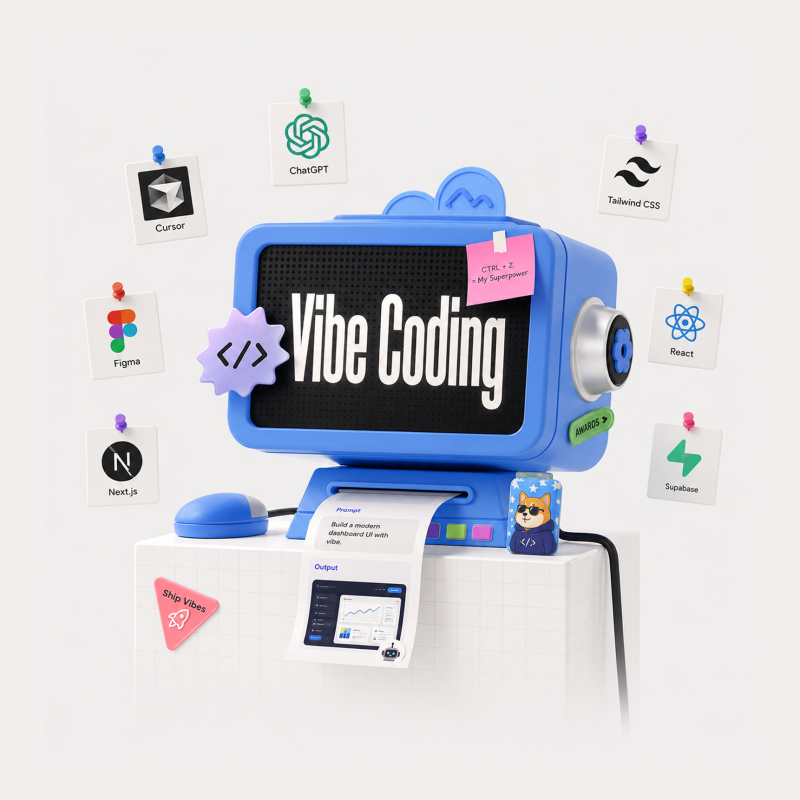
Vibe Coding is the transition from manual, line-by-line coding to directing AI models through conversational instructions. Instead of writing CSS grid declarations or JavaScript hooks, you describe the "vibe," functionality, and user flow. The AI handles the underlying code execution.
It drastically lowers the technical barrier for prototyping, allowing founders and product teams to test concepts in record time.
User Prompt: "Create a modern, dark-mode dashboard for a SaaS analytics tool with a clean sidebar and interactive charts."
AI Output: Working React + Tailwind CSS code generated in under 30 seconds.
Why AI Won’t Replace Designers (It Just Raises the Bar)
While AI can output working code instantly, working code is not the same as a great user experience. Here is why expert UI/UX design remains indispensable:
1. UX Strategy vs. Code Generation
AI can render a button instantly, but it doesn't understand user psychology. It cannot determine why a call-to-action belongs above the fold, or how micro-friction in a checkout flow drops conversion rates.
2. Brand Identity & Visual Distinction
Vibe coding frequently produces generic, "template-style" UIs. Creating a memorable brand presence requires custom visual hierarchy, bespoke iconography, and intentional design choices—the exact qualities we embed into our Caraka UI Kits & Design Systems.
3. Scalable Design Systems vs. Code Debt
Prompting AI without a structured design system leads to fragmented styles, inconsistent spacing, and messy technical debt. Professional teams rely on rigid design tokens to ensure cross-platform scalability.
4. Accessibility (a11y) & Usability
AI-generated interfaces often fail basic WCAG accessibility standards—missing proper screen-reader aria labels, keyboard navigation focus, and adequate color contrast ratios.
How Digital Teams Should Adapt
Instead of resisting AI, forward-thinking creators are integrating vibe coding into their workflows to accelerate delivery:
- Rapid Prototyping: Use AI builders to turn initial Figma wireframes into interactive HTML previews within hours.
- Focus on Product Strategy: Spend less time tweaking layout code and more time solving core customer problems.
- Partner with Design Experts: Leverage professional UI/UX agencies to build the foundational design system before feeding components into AI code generators.
The Verdict: A New Superpower for Creators
Vibe coding won't replace designers or developers—it will replace creators who fail to adapt. By combining AI-driven execution speed with human-centered design principles, product teams can ship superior digital products faster than ever before.
Looking to elevate your product's UI/UX? Explore how our team at Caraka.io creates clean, conversion-focused design systems and web experiences tailored for modern tech brands.